
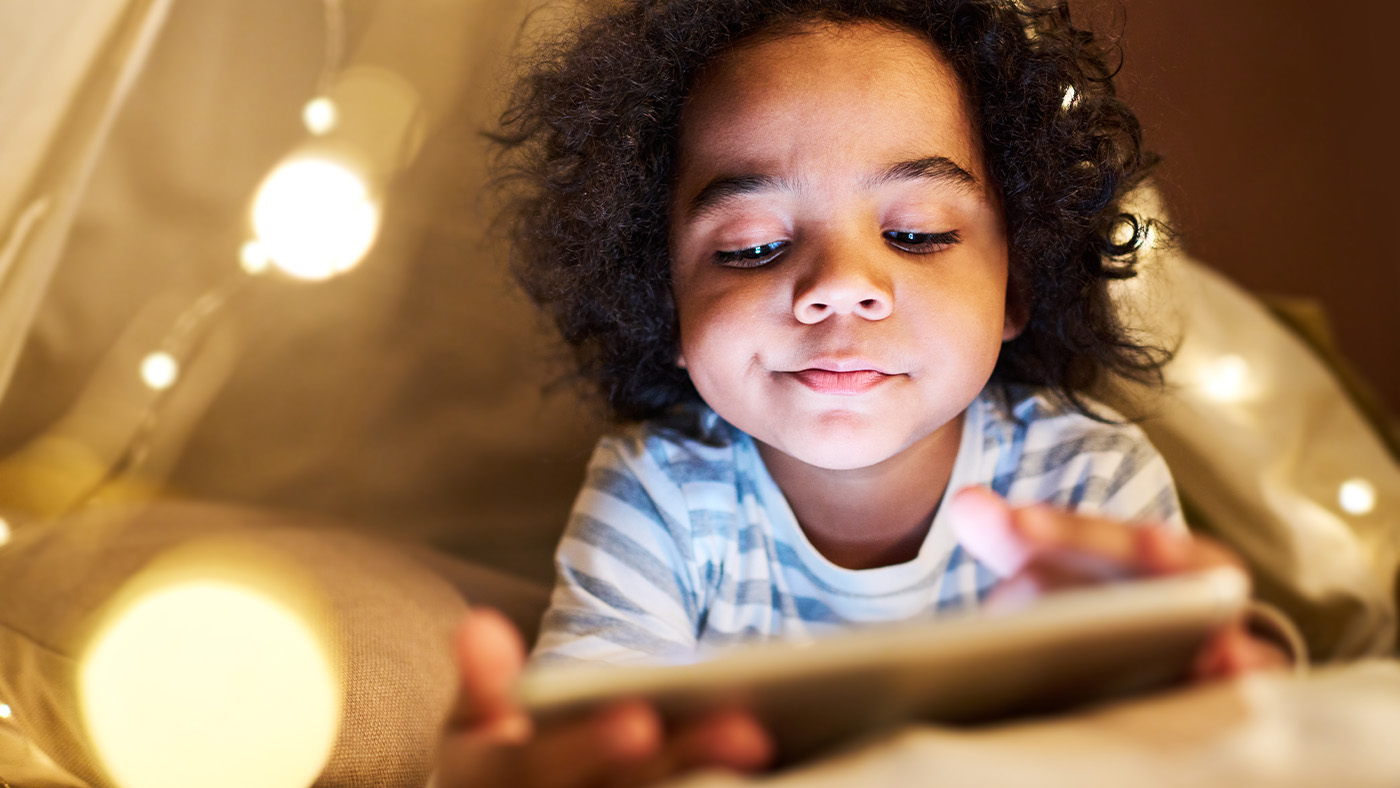
If bedtime in your house involves prying a phone or tablet out of your child’s hands, you’re not alone in that. Screens are everywhere, and they’re tough competition, especially at the end of a long day.
Kids need plenty of sleep to grow and stay healthy, but 8 out of 10 teens (and roughly one in three adults) don’t get enough. Preschoolers need 10 to 13 hours a day, and school-aged kids need 8 to 11 hours a night. That’s a tall order under any circumstances, and screen time before bed doesn’t make it easier. Here’s what’s happening behind the scenes, and a few practical ways to help your child sleep better.
How does screen time affect sleep?
Research has linked non-schoolwork screen time to a range of effects on young people, including reduced physical activity, anxiety, fewer close friendships, and unpredictable sleep patterns. Using screens after bedtime alone increases the risk of insomnia by more than half.
High-quality educational content is generally a better choice than mindless scrolling, but when it comes to sleep, the type of screen time matters less than the timing. Watching videos, reading articles, and scrolling social media all take up time that would otherwise go toward rest.
Blue Light and Melatonin
Artificial light is one of modern life’s most convenient inventions, but it also means our nights aren’t as dark as they used to be. Light on the blue end of the spectrum boosts reaction time, mood, and alertness, which is great during the day but works against you at bedtime. When your child is exposed to light at night, their body produces less melatonin, the hormone that helps regulate their internal clock.
In one University of Toronto study, researchers exposed one group to ordinary dim light and a second group to blue light, but gave that second group goggles that filtered it out. The filtered group’s melatonin production looked similar to the control group, while unfiltered blue light exposure reduced melatonin noticeably. Avoiding screens near bedtime is still the best approach, but a blue light filter can help when screens are hard to avoid entirely.
The easiest tip my families have been able to implement is simply removing screens from bedrooms and setting a “screen off” time. I have found that most kids will respond well to this if the parents set the example and put restrictions on themselves as well.
7 Ways Screen Time Affects Sleep
Sleep is essential to your child’s mental and physical health, and screens affect it in more ways than just the light they emit. Notifications and the endless scroll of short-form content can pull kids in long after they meant to put the device down.
1. Screen Time Delays Bedtime
Using screens in the lead-up to bed, or after getting into bed, can cut overall sleep by an average of 24 minutes. Bright light signals to the body that it isn’t time to sleep yet, which lowers melatonin and keeps kids awake. Exciting or stressful content can also linger in a child’s mind even after the screen is off.
2. Blue Light Keeps the Brain Awake
Natural blue light fades as the sun sets, but our screens carry that same energizing light straight into the night. It signals the brain to stay alert, which is useful during the day but makes it harder to fall and stay asleep after dark.
3. Is it bad to watch TV before bed?
Many people like some background noise or distraction while drifting off, and as TVs merge with phones and tablets, it’s harder than ever to get away from screens at bedtime. Nearly two-thirds of people fall asleep with the TV on. As comforting as a favorite show might feel, watching at night isn’t the best choice for long-term sleep health.
4. Smartphones and Sleep: More Nighttime Wakeups
Between texts, social apps, group chats, games, and notifications, a phone can buzz or chime nonstop. If your child keeps their phone in their room, even occasional vibrations or alerts can interrupt sleep, and checking the phone brings a fresh dose of blue light right when they should be winding down. Try having your child put their phone away about an hour before bed, somewhere they won’t be tempted to check it overnight.
5. How Screen Time Contributes to Anxiety and Depression
Sleep and mood affect each other in both directions. People with insomnia have roughly 10 times the risk of depression and 17 times the risk of anxiety compared to the general population. Researchers aren’t entirely sure whether poor sleep drives mood struggles or the reverse, but the connection between healthy sleep habits and better mental health is well established.
6. Sleep Loss Affects Learning, Focus, and Mood
Sleep touches nearly every part of the body, including your child’s ability to focus and learn. The brain systems responsible for executive function are especially sensitive to sleep loss, so too little sleep doesn’t just affect mood, it also makes it harder for kids to take in, retain, and later recall information.
7. What does too much screen time do to your brain?
Technology isn’t all bad, and used thoughtfully, it can support learning and connection. But too much screen time, especially the wrong kind, can affect how a young or teenage brain develops by overstimulating the visual system at the expense of other kinds of learning. Most kids today get more screen time than pediatric guidelines recommend:
- 0 to 2 years: Kids under 2 average a little over an hour a day; providers recommend none at this age.
- 2 to 8 years: Average use is 2 to 3 hours a day; providers recommend no more than 1 hour.
- 8 to 13 years: Average use is about 5.5 hours a day; providers recommend under 2 hours.
- 13 to 18 years: Average use exceeds 8 hours a day; providers recommend no more than 2 hours outside of schoolwork.
If screen time is hard to avoid entirely, try steering your child toward higher-quality content and building in a consistent wind-down period before bed.
As we know that screens are here to stay, set realistic expectations that you know you can achieve. Start with baby steps. Start by removing screens from bedrooms. Have a centralized charging station in the kitchen or family room. Move back the “screen off” time by 30 minutes each night until you achieve your goal.
Building a Better Bedtime Routine
Small, consistent changes tend to work better than an abrupt screen ban. Have your child put screens down 30 to 60 minutes before bedtime and turn off notifications overnight so alerts don’t sneak in. If your child uses a night light, choose a dim, red-toned bulb, since red light interrupts sleep less than other colors.
It’s okay if this feels like a work in progress. Small, consistent changes add up over time. If you’re noticing ongoing sleep struggles or have questions about screen habits at any age, reach out to your provider at Families First Pediatrics. We’re happy to help you build a routine that works for your family.
Sources
CDC, Associations Between Screen Time Use and Health Outcomes Among US Teenagers
Harvard Health, Blue light has a dark side
University of Toronto, Is modern life keeping us up at night? UTM study puts sleep myth to rest
Scientific Reports, Home lighting, blue-light filtering, and their effects on melatonin suppression
JAMA Pediatrics, Toddler Screen Use Before Bed and Its Effect on Sleep and Attention
Sleep Review, Neartly Two-Thirds Fall Asleep with TV On
National Sleep Foundation, Screen Use Disrupts Precious Sleep Time
Sleep Doctor, Why Are We All Still Watching TV Right Before Bed?
Stanford Medicine, How sleep affects mental health (and vice versa): What the science says
American Psychological Association, Sleep deprivation makes us less happy, more anxious
Johns Hopkins Medicine, Depression and Sleep: Understanding the Connection
American Academy of Pediatrics, Average Amount of Screen Time for Children and Young Adults