
Healthy smiles start long before your child loses their first tooth, and it’s normal to wonder whether you’re doing enough to protect those little teeth from the start. Preventing cavities in kids under 5, including cavities in toddlers, comes down to a few simple daily habits, and the good news is that they make a real difference.
More than half of teenagers in the United States have had cavities in their adult teeth, and untreated decay can affect your child’s comfort, confidence, and even school performance down the road. Building healthy dental habits early sets your child up for a lifetime of healthier smiles.
What causes cavities in young children?
Your child’s teeth are protected by a thin outer layer called enamel. Tooth decay, commonly known as cavities, happens when that protective enamel breaks down. It starts small, as tiny cracks in the tooth’s armor, and grows over time if left untreated.
Cavities are caused mainly by bacteria and diet working together. When your child eats foods with sugar or carbohydrates, those same foods feed the bacteria living in their mouth. As the bacteria break down sugars and carbs, they produce acids that wear away tooth enamel. If teeth aren’t cleaned soon after eating, that bacteria forms plaque, which hardens into tartar and shields bacteria as they continue eating away at the enamel, opening tiny holes that grow into cavities.
Fluoride for Kids
Cavities are also more common in communities without fluoridated water, since fluoride is a protective mineral that helps keep tooth enamel strong and reduces how often cavities form and how severe they get. Utah’s water supply is no longer fluoridated, which makes fluoride toothpaste and your child’s regular dental visits even more important for families in our community.
7 Tips for Preventing Cavities in Young Children
Here are seven things you can do to encourage good oral health from a young age:
1. Start Cleaning Gums Before the First Tooth Appears
You can build healthy habits long before your baby’s first tooth ever shows up. After each feeding, gently wipe your baby’s gums with a clean, damp, soft cloth or gauze. This clears away residue and helps your baby get comfortable with oral care before teeth even erupt.
2. Don’t Share Utensils or Clean Pacifiers With Your Mouth
If you’ve ever had a cavity, your mouth carries bacteria capable of causing tooth decay, and that bacteria can transfer from caregiver to child through everyday habits like sharing utensils or cleaning a pacifier by mouth. If your baby’s pacifier, utensil, bottle, straw, or sippy cup needs cleaning, rinse it with water instead, and offer a fresh spoon when you pre-taste baby food.
Healthy teeth are a family effort. When everyone in your home takes good care of their own teeth, it lowers the chances of accidentally passing along cavity-causing bacteria.
[Provider note: share a quick, encouraging example here about a family who successfully built these habits, or a tip you give parents in the exam room.]
3. Watch What Your Toddler Drinks (and When)
For the first several months, babies drink only breast milk, formula, or a mix of both. As your child starts solid foods, their drink options expand, and bottles give way to sippy cups of water, milk, and juice.
Sugary drinks like juice and soda feed bacteria and produce enamel-eating acids, while their own natural acids can wear away enamel even without any help from bacteria. Even sugar-free drinks aren’t off the hook. Many contain phosphorus and citric acid, which can damage enamel on their own.
After your child’s first birthday, water should be their main drink, with milk as a close second. If they do have a sugary or sugar-free drink, skip brushing right away. Instead, rinse their mouth with water and wait about an hour before brushing.
4. Prevent Baby Bottle Tooth Decay
A bedtime bottle might help your baby drift off, but it isn’t great for their dental health long term. It lets sugars in formula or breast milk linger in the mouth for hours, a pattern that can lead to what’s known as baby bottle tooth decay. The same risk applies to sipping sugary drinks from a sippy cup throughout the day.
If your child needs a bottle at bedtime, fill it with water only, and remember that babies shouldn’t have water at all until they’re at least 6 months old. After that first half-birthday, babies can have 4 to 8 ounces of water a day, and after their first birthday, 8 to 32 ounces.
5. Choose Tooth-Friendly Snacks
Brushing and flossing are half the picture; what’s on your child’s plate is the other half. Sugary, starchy snacks are popular with kids, but they’re just as popular with the bacteria that cause decay. Try offering:
- Cheese, yogurt, and other dairy products
- Water
- Crunchy veggies like carrots and celery
- Apples, pears, and other fiber-rich fruits
- Leafy greens and nuts
- Strawberries and other nutrient-rich fruits
Fiber-rich fruits and vegetables help clean teeth naturally and stimulate saliva, which rinses away food particles. It’s not a replacement for brushing, but as far as snacks go, it’s the next best thing.
6. Schedule the First Dental Visit by Age One
Babies should see a pediatric dentist by their first birthday or within 6 months of their first tooth coming in, whichever comes first. That first visit is a great time to talk through common questions like baby bottle tooth decay, pacifier habits, and early orthodontic concerns.
Families First Pediatrics believes every child deserves access to preventive dental care, regardless of insurance coverage. Our Three and Under Free program provides no-cost dental exams, cleanings, X-rays, and fluoride treatments until your child’s third birthday.
7. Make Brushing a Routine Kids Look Forward To
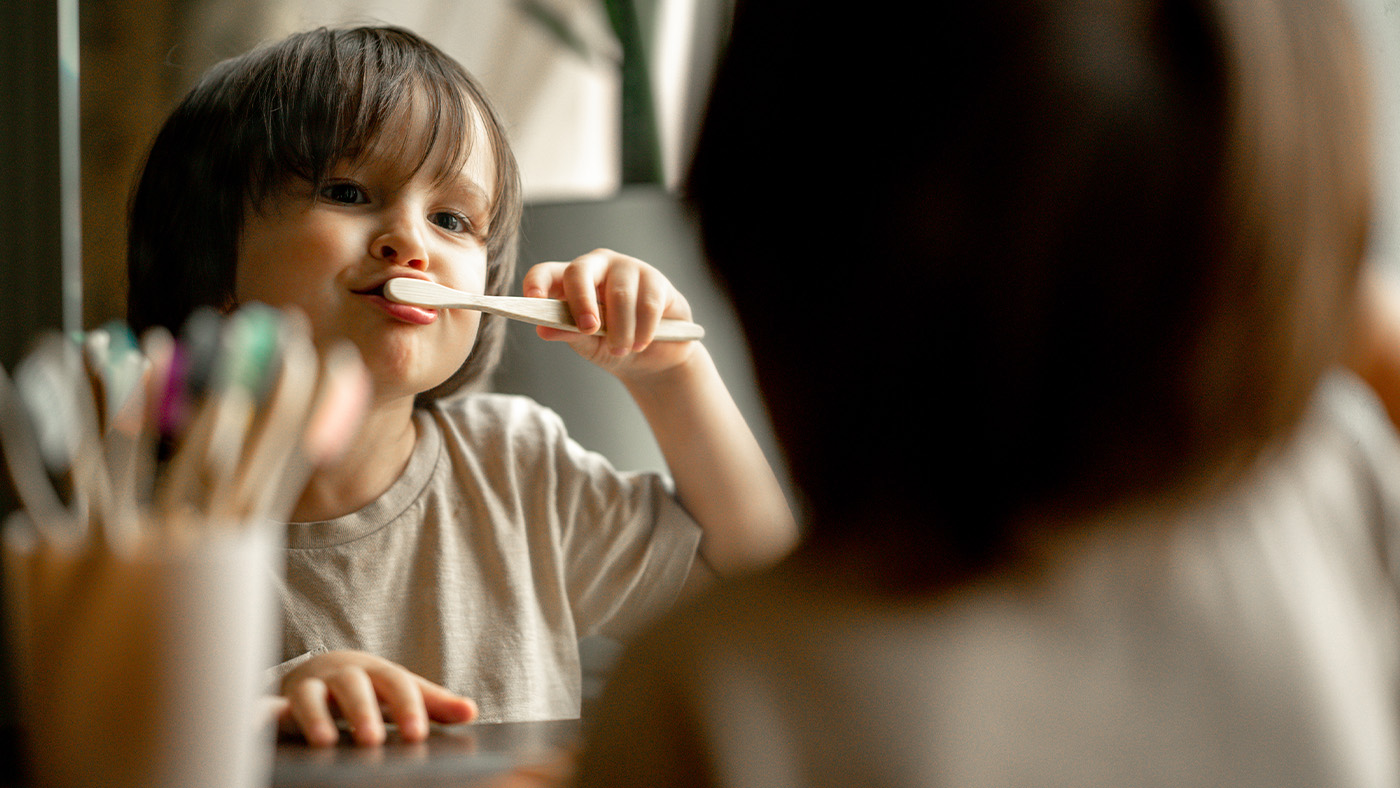
Getting kids to brush well and consistently can be a challenge, but it doesn’t have to be a battle. Start before the first tooth with a warm, wet, soft cloth, then switch to a small soft-bristled brush and a pea-sized amount of fluoride toothpaste once that first tooth appears. As your child gets older, try a brushing song, a reward chart, or other fun ways to make brushing more entertaining.
Signs Your Child May Already Have a Cavity
Kids are still learning to care for their own teeth, and despite everyone’s best efforts, cavities sometimes happen anyway. As your child’s teeth continue to emerge, keep an eye out for:
- White spots: small white spots on the tooth surface, an early sign that enamel is breaking down.
- Sensitivity: discomfort with hot, cold, or certain foods.
- Discoloration: a light brown spot that deepens and darkens over time.
- Pain: discomfort around a tooth when eating, drinking, or biting down.
Twice-yearly checkups are usually all your child needs to stay ahead of cavities, but if you notice mouth pain, a toothache, or other signs of decay, don’t wait for the next scheduled visit. Reach out to your provider at Families First Pediatrics to get your child seen sooner.
Sources:
KUER, A year after Utah’s fluoride ban, education and awareness are the biggest changes
Johns Hopkins, Tooth Decay (Caries or Cavities) in Children
Mayo Clinic, Cavities and tooth decay
Tiny Smiles, A Give Kids A Smile Program
Department of Health and Human Services, Baby Your Baby – Dental care after birth
University of Utah Health, Sugar Free Drinks Can Still Damage Teeth
University of Illinois Chicago, Thinking About Another Sweet Gulp? Think Again
Healthychildren.org, Why It’s Important to Take Care of Baby Teeth
University of Utah Health, How to Check For Tooth Decay in Toddlers
Healthychildren.org, Recommended Drinks for Children Age 5 & Younger
University of Illinois Chicago, The Best Foods For A Healthy Smile and Whole Body
UT Health San Antonio, 5 teeth-friendly foods to pack in your children’s lunch
University of Rochester Medicine, The Best and Worst Foods for Your Teeth
PennState Extension, ABCs of Growing Health Kids: Keep on Snacking