Watching your child struggle to breathe is one of the scariest moments a parent can face. Your heart races, your mind jumps to worst-case scenarios, and you’re not sure whether to wait it out or head straight to the emergency room. You’re not alone in that fear, and there’s a lot you can do to feel more prepared.
Some form of respiratory distress affects about 7% of newborns, or roughly 1 in 17 babies. Learning the signs of respiratory distress in a child and knowing when to call your child’s provider or seek emergency care, can help you catch problems early and avoid longer-term complications.
What Is Respiratory Distress in Children?
When your child is struggling to breathe, their body changes behavior to try to pull in more oxygen. Those changes, like faster breathing or unusual body positions, are signs of respiratory distress, and they can mean your child needs medical attention.
Asthma is the most common cause of breathing problems in infants and older kids alike. It causes the airway to swell and narrow, and it can be triggered by smoke, chemicals, pollution, allergens, and other irritants. Breathing trouble can also come from infections like pneumonia or sepsis (a serious, body-wide infection), a collapsed lung (pneumothorax), or fluid in a newborn’s lungs at birth (meconium aspiration syndrome).
Respiratory distress syndrome (RDS) is another common cause of breathing difficulty, especially in premature newborns whose lungs haven’t fully developed yet. We’ll cover RDS in more detail below.
7 Symptoms of Respiratory Distress in a Child
Older kids and adults can tell you when they’re having trouble breathing, but babies rely on body language instead. Breathing problems in infants can look different than they do in older kids, so here’s what to keep an eye out for.
1. Rapid Breathing in a Toddler
If your child starts breathing much faster than normal, their body may be trying to pull in more oxygen. This is called tachypnea, and it often comes with a faster heart rate too.
2. Infant Labored Breathing
Labored breathing is a hallmark of respiratory distress. If your baby is working harder than usual to breathe, you might also notice they’re more tired, sleeping more, or less alert than normal.
3. Child Shortness of Breath at Rest
It’s normal to breathe faster during play or exercise. But if your child has trouble catching their breath while resting, that’s worth paying attention to.
You might also notice unusual body positions. Lying down, they may tip their head back and raise their chin. Sitting up, they may lean forward. Both positions make it a little easier to breathe.
4. Baby Flaring Nostrils While Sleeping
Flared nostrils are one way the body pulls in more air. If you notice your baby’s nostrils flaring, especially while they’re sleeping or resting, it could be a sign of respiratory distress.
5. Retractions and Chest Pulling During Breathing
When a baby is working hard to breathe, they may use extra muscles in the chest and neck to help. This can cause a visible pulling-in motion called retractions. You might see the chest sink in below the neck, under the breastbone, or between the ribs.
6. Wheezing, Grunting, or Noisy Breathing
Respiratory distress often comes with sounds like wheezing or grunting. Wheezing is a whistling noise with each breath that can mean the airway is narrowed. Grunting while exhaling is another sign the respiratory system is working harder than it should.
7. Color Changes Around the Lips or Face
Cyanosis is a blue or purplish tint that can appear around the mouth, inside the lips, or on the fingernails when your baby isn’t getting enough oxygen. Their skin may also look pale or gray overall.
Five Cardinal Signs of Respiratory Distress in Infants
The seven symptoms above cover the most common ways respiratory distress shows up, but providers often watch for five in particular. Think of this as your quick-reference list:
- Nostril flaring: one of the most common signs, and an easy one to spot.
- Grunting: a noise your baby makes with each exhale, caused by the airway partially closing to help keep the lungs open.
- Rapid breathing (tachypnea): a newborn’s typical rate is 40 to 60 breaths per minute; anything faster is considered rapid.
- Retractions: visible pulling-in at the breastbone, between the ribs, or above the collarbones.
- Cyanosis: blue or purplish skin, most visible on the lips, mouth, earlobes, and fingernails.
RDS Newborn: Understanding Respiratory Distress Syndrome
Some form of respiratory distress affects about 7% of births, but respiratory distress syndrome (RDS) specifically affects closer to 1%. It’s most common in babies born significantly premature.
When a baby is born early, their lungs may not yet make enough surfactant, a natural liquid that helps keep the lungs open and expand evenly. Babies don’t start producing surfactant until around 28 weeks of pregnancy, and often don’t make enough until closer to full term. A parent’s health and genetics can also play a role.
RDS usually shows up within the first 24 hours after birth. If your baby has rapid or shallow breathing, chest retractions, flared nostrils, or grunting, your child’s provider may order a chest X-ray, blood tests, or an echocardiogram (an ultrasound of the heart) to confirm the diagnosis.
RDS Treatment and Respiratory Distress Syndrome in Newborns Treatment
If you and your child’s provider know ahead of time that your baby will be born early, you may be given corticosteroids (an anti-inflammatory medication) to help speed up lung development. After birth, your provider will closely monitor your newborn’s heart rate, breathing rate, and oxygen levels.
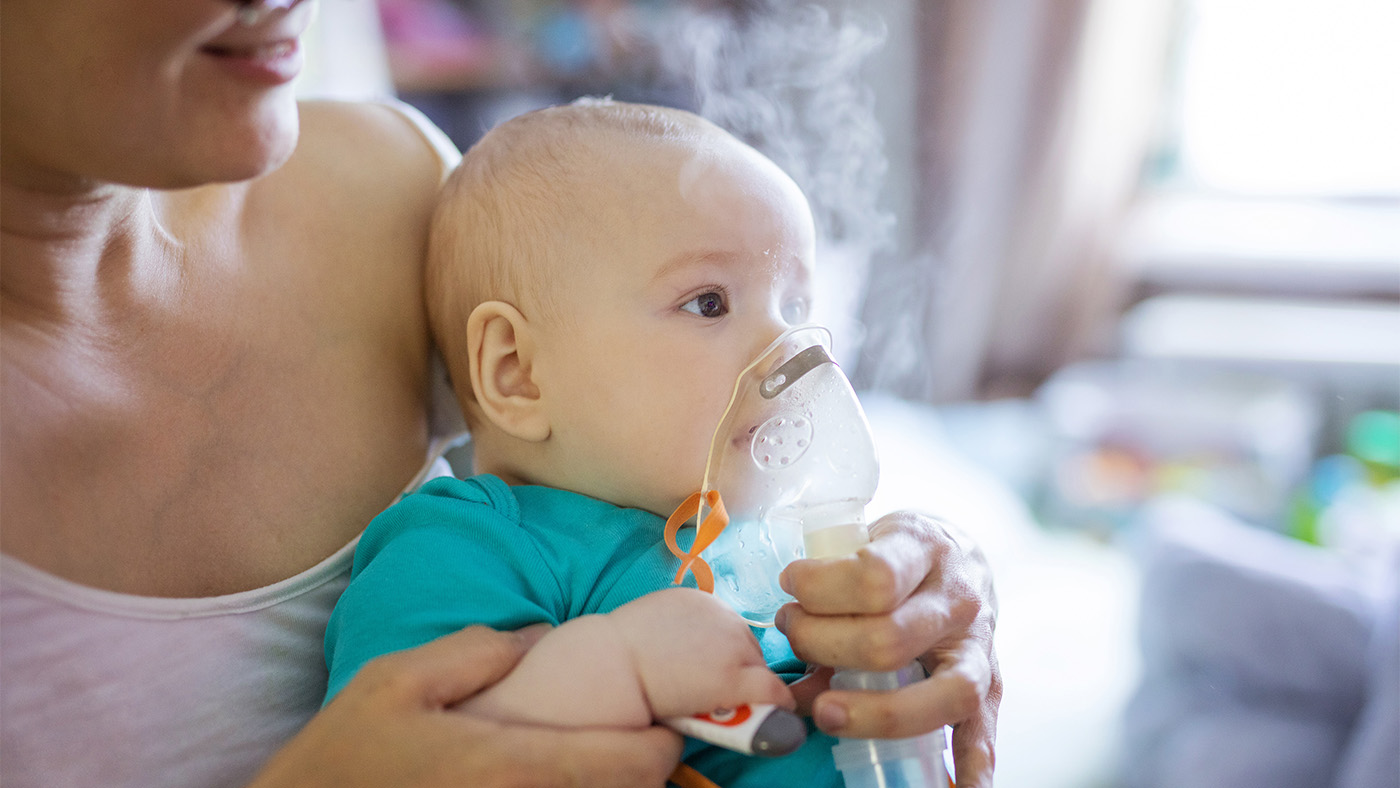
If RDS does develop, treatment is usually straightforward and effective. It often includes respiratory support, like a nasal cannula, face mask, or another oxygen delivery method. Your baby may also receive surfactant replacement therapy, where surfactant is given directly into the lungs.
Treatment for RDS has come a long way over the past few decades. Most babies recover by the time they would have reached full term, and with treatment, long-term complications are uncommon.
When Parents Should Seek Emergency Care
Before you leave the hospital, staff will make sure your baby is healthy enough to go home. But if breathing trouble shows up later, here’s how to know what to do.
Keep every well-child visit, and call your child’s provider if breathing trouble comes up between appointments. If your baby went home with oxygen support, follow all of the instructions you were given.
Retractions, cyanosis, or unresponsiveness are serious and need medical attention right away, most likely in the emergency room. If your child is having serious trouble breathing, that’s an emergency. Call 911 immediately.
We’re Here to Help
If you’re ever unsure whether what you’re seeing is normal, don’t hesitate to reach out. Families First Pediatrics providers are here to help you figure out what’s normal and what’s not, so you don’t have to navigate it alone. Contact your provider anytime you have questions or concerns about your child’s breathing.
Sources
- Stanford Medicine, Signs of Respiratory Distress in Children
- Cedars Sinai, Common Breathing Problems in Kids and How to Treat Them
- Johns Hopkins Medicine, Respiratory Distress Syndrome
- Raising Children Network, Respiratory distress syndrome (hyaline membrane disease)
- American Family Physician, Newborn Respiratory Distress
- Children’s Hospital of Philadelphia, Signs of Respiratory Distress in Children
- Science Direct, Analysis of Grunting Sound in Infants for Predicting the Severity of Respiratory Distress Syndrome
- Johns Hopkins Medicine, Signs of Respiratory Distress
- JAMA Pediatrics, Significance of Grunting Respirations in Infants Admitted to a Well-Baby Nursery
- American Academy of Pediatrics, Respiratory Distress in the Newborn