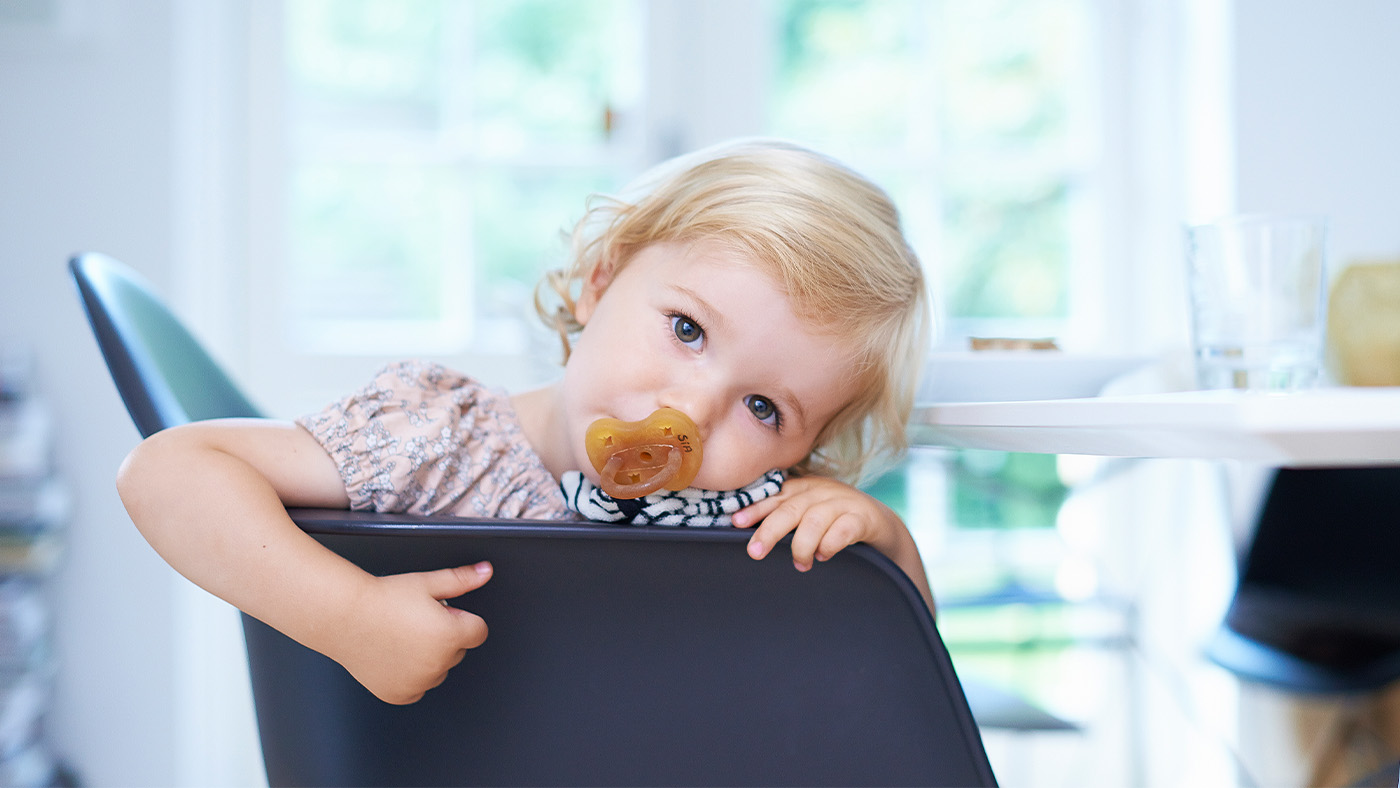
Peas go with carrots, macaroni goes with cheese, and babies go with pacifiers. No matter what you call it, a binky, paci, sucky, soothie, dummy, the list goes on, pacifiers are one of the go-to newborn accessories. They can help to soothe your newborn and may even reduce the risk of SIDS or SUID.
Your baby’s obsession with their pacifier is actually a good thing. Babies are born with a suckling instinct that helps them learn to nurse. It’s a common way for babies to regulate their emotions and soothe their newborn nervous system. Most toddlers give up the binky on their own around age one or two, but others may need a little encouragement.
Getting rid of the binky once and for all can be a point of tension, and can even cause a bit of tension between you and your baby. Going into binky banishment with the right strategy can help to ease the transition.
When should kids stop using pacifiers?
Babies aren’t born with very many skills, but they know how to suck on things. It’s one of the few things they are masters at. The suckling instinct helps your baby latch onto a nipple while nursing, but it also extends to fingers and toes, toys, pacifiers, and anything else your baby can get their mouth around.
The general recommendation is to wean your baby from their pacifier between 12 and 24 months. By the age of two, the benefits of using a pacifier have dwindled, and the risks have increased.
After the first year, your baby will be learning to talk, and a pacifier can get in the way of forming words. Not to mention the potential impact on your baby’s teeth. A pacifier can be an important part of your newborn’s life, but you want to get them off the binky before it’s too late.
How to Get Rid of the Pacifier (Without the Drama)
Using a pacifier is a normal part of your baby’s early development, but babies can become overly dependent on them. If you’re hoping to get rid of your baby’s binky without negatively impacting the harmony of your home, there are a few things you can do to make the process more fun.
Replace It: Offer a replacement comfort object, such as a blanket or stuffed animal. You can even let your child “trade in” their pacifier for a new comfort object of their choosing, to give them some ownership over the weaning process.
Track and Reward: Sticker charts are a tried-and-true way to help kids build or break a habit. Give your child a sticker for every day they don’t use the pacifier, then provide a reward when they hit a target number of days. Don’t forget to give positive praise when your child goes without the pacifier.
Binky Fairy: The Binky Fairy works a lot like the Tooth Fairy. You can leave the pacifier out for the Fairy to take, leaving something else in exchange.
A Proper Send Off: A little closure can go a long way. Have a going-away party for your baby’s binky so they can celebrate their binky, thank it for its help, and send it on its way.
Pass It On: Tell your child that pacifiers are for babies and that they can help other babies by donating theirs. You can even box up the pacifier and “mail it away.”
How to Wean Off a Pacifier Gradually
If you don’t want your baby to go cold turkey, you can wean them off more slowly instead. A gradual weaning can be more successful than abruptly taking the binky away. It gives your baby a chance to get used to the idea of no longer having a pacifier.
Don’t use the pacifier as your first line of defense if your baby is upset. Before offering a pacifier, try other comfort methods instead, such as soothing your baby with gentle movement, skin-to-skin contact, feeding or burping, swaddling, white noise, or a simple change in position or environment.
Limit pacifier use to naps and nighttime, then limit it to only nighttime, and continue to gradually reduce the amount of time your baby uses the pacifier until they don’t need it anymore.
What if my child switches to thumb sucking after getting rid of the pacifier?
Lots of babies suck their thumbs; you can even see babies do it in utero. Sucking on things is soothing to babies and helps them comfort themselves when they’re stressed or overwhelmed. That sucking instinct is a good thing, but it can lead your child to find something else to suck on once the binky is gone. And the thumb is right there.
Getting rid of a binky is hard enough, but battling a thumb-sucking habit can be a little more challenging. You can always take the binky away, but your baby’s thumb comes attached.
You can use the same strategies for thumb sucking as you used to wean off the pacifier. Try offering distractions, a replacement like a stuffy or a toy, sticker charts, and more. Consider your child’s temperament and find a method that motivates them. Typically, thumb sucking diminishes on its own, but if it lingers too long, it can have social and dental impacts.
Prolonged Pacifier Use & Orthodontic Implications
If your child uses a pacifier for too long, it can alter the development of their teeth and jaws. If they use a binky until age three or later, they might develop orthodontic issues such as an open bite, crossbite, or other malocclusion.
The consistent pressure of a pacifier can push the bones out of their normal positions. It’s similar to how braces work, by using a little bit of pressure over a long period of time, to move the teeth and jaws. The difference is that a pacifier moves them in ways you don’t want. It can make teeth crooked or cause them to point farther inward or outward than they otherwise would.
If your baby doesn’t give up the pacifier, these issues could become severe enough to need braces or other orthodontic treatments. And if you have any questions or need any help weaning off a pacifier, the team at Families First Pediatrics is here to help!
Sources:
University of Utah, The Pacifier Dilemma: When to Start, When to Stop, and How to Transition
American Family Physician, Risks and Benefits of Pacifiers
Nationwide Children’s, Pacifiers: When to Stop Using Them
Mayo Clinic, Pacifiers: Are they good for your baby?
Center for Pediatric Dental Health, When Should Baby Stop Using a Pacifier? Sooner, the Better!
What to Expect, When Should You Take Away Your Toddler’s Pacifier?
CNN Health, When should your child stop using a pacifier?
Children’s Mercy, Saying goodbye to the pacifier: A gentle guide for parents
Champions Pediatric Dentistry, Weaning A Child Off Of A Pacifier
The Bump, Experts and Real Parents on When to Stop Pacifier Use
The Bump, Why Babies Suck Their Thumbs—and When to Curb the Habit