
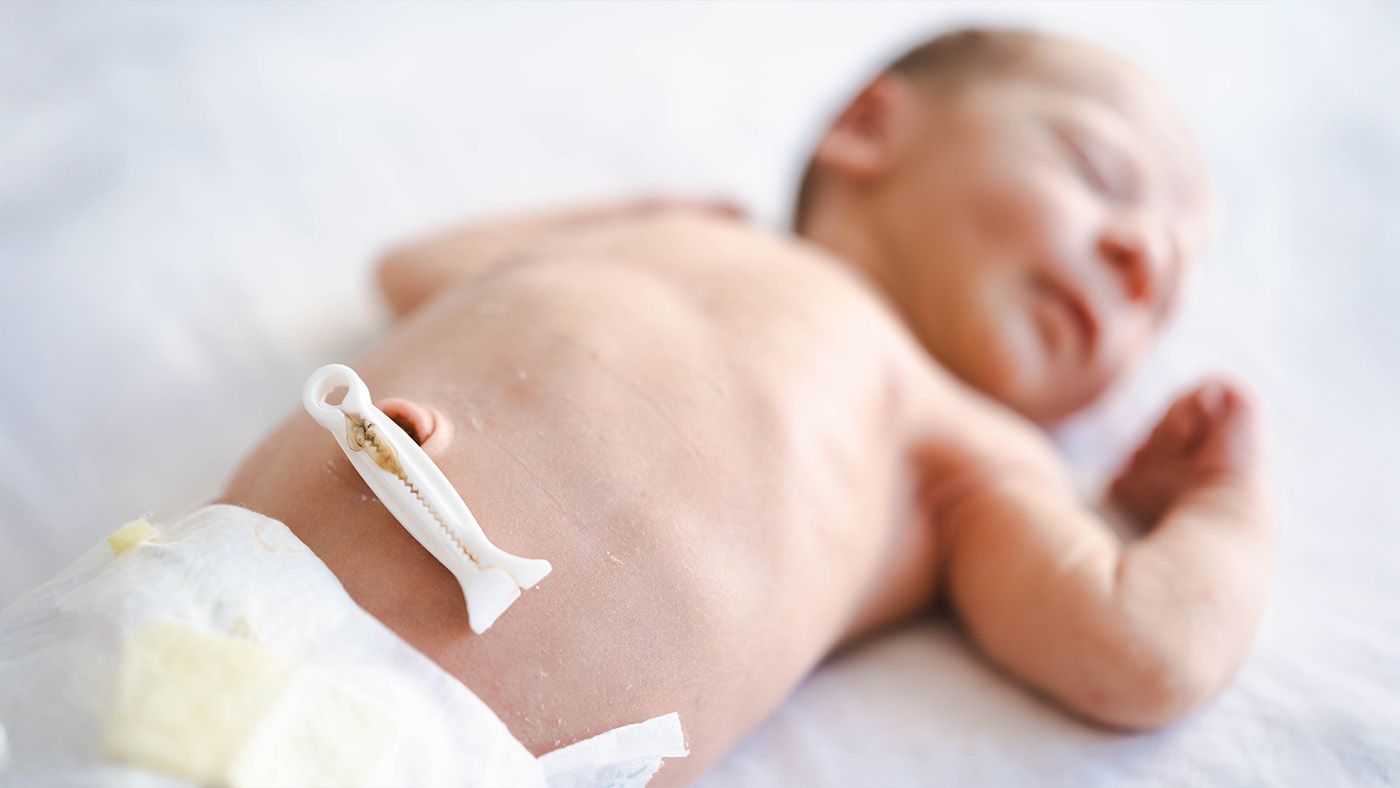
Belly buttons are unique from baby to baby, a one-of-a-kind physical reminder of the connection between parent and child. They are ordinary features of bodies big and small; a healed wound left over from where the umbilical cord once was.
In the womb, the umbilical cord connects to the placenta, delivering oxygen and nutrients while carrying away waste. Shortly after birth, the umbilical cord gets clamped and cut, leaving a tiny stump still connected to baby. It can take some time for the stump to heal and fall off, leaving your baby’s adorable belly button behind.
During this healing process, many parents wonder if their baby’s stump looks “normal” and what do they need to do to keep things happy and healthy. Fortunately, taking care of your baby’s umbilical cord stump is mostly about letting nature take its course.
Umbilical Cord Care for New Parents
Most of the time, a newborn’s umbilical cord stump dries up and falls off all on its own without parents needing to do anything special. If you keep it clean, keep it dry, and look out for signs of infection, the stump should heal without much help from anyone.
How do I care for my baby’s umbilical cord stump?
Keep it dry: Avoid getting the umbilical cord stump wet and keep it exposed to air. Some newborn diapers have a hole in the front, so the stump remains uncovered. Otherwise, fold the front of the diaper down to help the stump dry out more quickly.
Keep it clean: Clean any fluid that seeps from the umbilical stump with a cotton swab. When changing your baby’s diaper, check to see if any urine or stool got on the stump. If so, clean it off to prevent infections. Keeping the diaper folded at the front can also help prevent a dirty diaper from spreading to your baby’s belly.
Keep it loose: Your baby’s umbilical cord stump should heal on its own relatively quickly, but in the meantime, it remains a sensitive part of your baby’s body. Dress your baby in loose-fitting clothing to prevent clothing from pulling on the stump and causing injury. Keeping clothes on your baby help prevent accidental bumping of the healing stump.
Sponge baths: Baby bathtime is an important bonding opportunity for newborns and caregivers, but don’t break out the tiny bathtub just yet. Give your baby sponge baths during the first few weeks to help keep the stump dry and lower the risk of infection. Dip a soft cloth in warm water, wring out the excess water, and gently wipe your baby’s body from head to toe. Pay special attention to creases, such as the armpits and the diaper area. Be careful around the umbilical cord and pat dry when bathtime is over.
Don’t clean with alcohol: In the past, parents were commonly told to clean their newborn’s umbilical stump with 70% alcohol. This is still common guidance in some parts of the world, but recent research suggests alcohol destroys the healthy bacteria that help the umbilical cord heal. And is not recommended routinely.
Be patient: Let things take their natural course. Let the stump fall off in its own time and never remove it by force, even if it’s hanging by a thread. Pulling the cord off early can cause trauma, unnecessary bleeding, and increase the risk of infection.
How long does it take for the umbilical cord stump to heal?
When does the umbilical cord fall off? It’s one of the most common questions new parents ask, but every baby is unique and each one heals at their own pace.
Umbilical cord stumps usually fall off about two weeks after birth. The most common period is 10-14 days, but the normal range is 5-21 days. If the cord stump hasn’t fallen off by the time your baby is four weeks old, contact your pediatrician. This may be a sign of an underlying health condition.
The stump will shrink and shrivel as it dries out. It’s also normal for your baby’s umbilical cord stump to change color dramatically throughout the healing period. It will start out flesh-toned, then change from yellowish green to brown, and finally to black.
Umbilical cord bleeding may happen on occasion. Like anything still in the process of healing, the stump may bleed if it bumps or rubs on something. You may also notice a little blood when the stump falls off. In either case, bleeding should stop quickly. If your baby’s umbilical cord stump continues to bleed, contact your pediatrician.
How to Clean a Newborn’s Belly Button After it Falls Off
Caring for your baby’s navel is usually straightforward without any real complications. More often than not, the umbilical cord stump dries up and falls away without incident, leaving an adorable belly button in its place. However, after the cord falls off, it may still take some time for your baby’s belly button to fully heal.
Redness is normal right after the cord stump falls off, but that redness shouldn’t spread out from the navel onto the belly. If it does, that’s a sign of infection and cause to visit the pediatrician. Continue keeping the area clean and dry during this period. Just like when a scab falls off, revealing the fresh skin below, a little bit of bleeding is totally normal when the umbilical cord stump falls off. Wipe away any secretions or blood with a wet cotton swab, then pat the area dry. Keep doing sponge baths while your baby’s belly button is still healing. Keep folding diapers and exposing the area to air flow. It could take about a week for your newborn’s belly button to finish healing after the stump falls off. After the skin is well healed, no debris or drainage, you can officially start submersion tub baths.
Sometimes, after the stump falls off, babies form something called an umbilical granuloma, a discolored piece of scar tissue on the belly button. Umbilical granuloma usually resolves on its own in a week or two. If it persists longer than that or if you’re concerned about it, your pediatrician can address it in the office.
Can’t wait to see if your baby gets an “outie” or an ‘innie”!
-Laura Holden
Sources: