Scoliosis is a common spinal condition that often becomes apparent in childhood. It often develops quietly, without pain or obvious symptoms at first, which can leave parents feeling surprised or even guilty when they learn that something might be “off” with their child’s spine, especially when your child seems otherwise healthy and active. The truth is, many loving and attentive parents don’t spot scoliosis right away, and that’s okay. Knowing what to look for and when to act can make all the difference.
Scoliosis is noted for a lateral (side-to-side) curvature in the spine of at least 10 degrees, and the condition impacts between one and three percent of kids in the United States, most of whom have mild cases requiring little or no treatment.
Regular checkups with a pediatrician are one of the most effective tools against scoliosis, because early diagnosis improves long-term prognosis. If, for instance, scoliosis is diagnosed before your child goes through a growth spurt, doctors can use back braces and other interventions to prevent the curvature from getting worse.
Causes and Types of Scoliosis
Scoliosis is usually a painless condition with minimal symptoms that may go unnoticed until it’s identified during a physical examination. There are no known specific causes or methods of prevention. Scoliosis is not caused by poor posture or any behavior you or your child may have engaged in.
Scoliosis risk factors include underlying spine, muscle, or nerve conditions, and a family history of scoliosis. There are three main types of scoliosis including:
Idiopathic Scoliosis: Idiopathic means that the specific cause is unknown. This is the most common type of scoliosis, usually showing up between the ages of 10 and 15, and accounting for more than 80 percent of cases.
Congenital Scoliosis: This is a rare spine abnormality detected at birth or in early childhood. It typically happens when the vertebrae don’t form properly while your baby is in the womb.
Neuromuscular Scoliosis: This type of scoliosis is caused by abnormalities in the muscles and nerves. It is often accompanied by other neurological or muscular conditions like cerebral palsy, spina bifida, or muscular dystrophy.
Understanding Idiopathic Scoliosis
Most cases of scoliosis are idiopathic, meaning there is no identifiable cause. Back pain may be slightly more common in idiopathic scoliosis, but the condition typically does not cause disability or impairment. Roughly four of every five scoliosis cases are idiopathic, and the condition affects about two percent of school-aged children.
Idiopathic scoliosis is characterized by side-to-side spinal curvature of 10 degrees or more. Mild cases typically require observation only, whereas moderate or severe cases may benefit from treatment. Many people can live their entire lives with mild idiopathic scoliosis without any noticeable symptoms. Your child’s pediatrician can determine whether your child has idiopathic scoliosis, the severity of their condition, and what treatment is appropriate, if any.
Recognizing Spinal Asymmetry
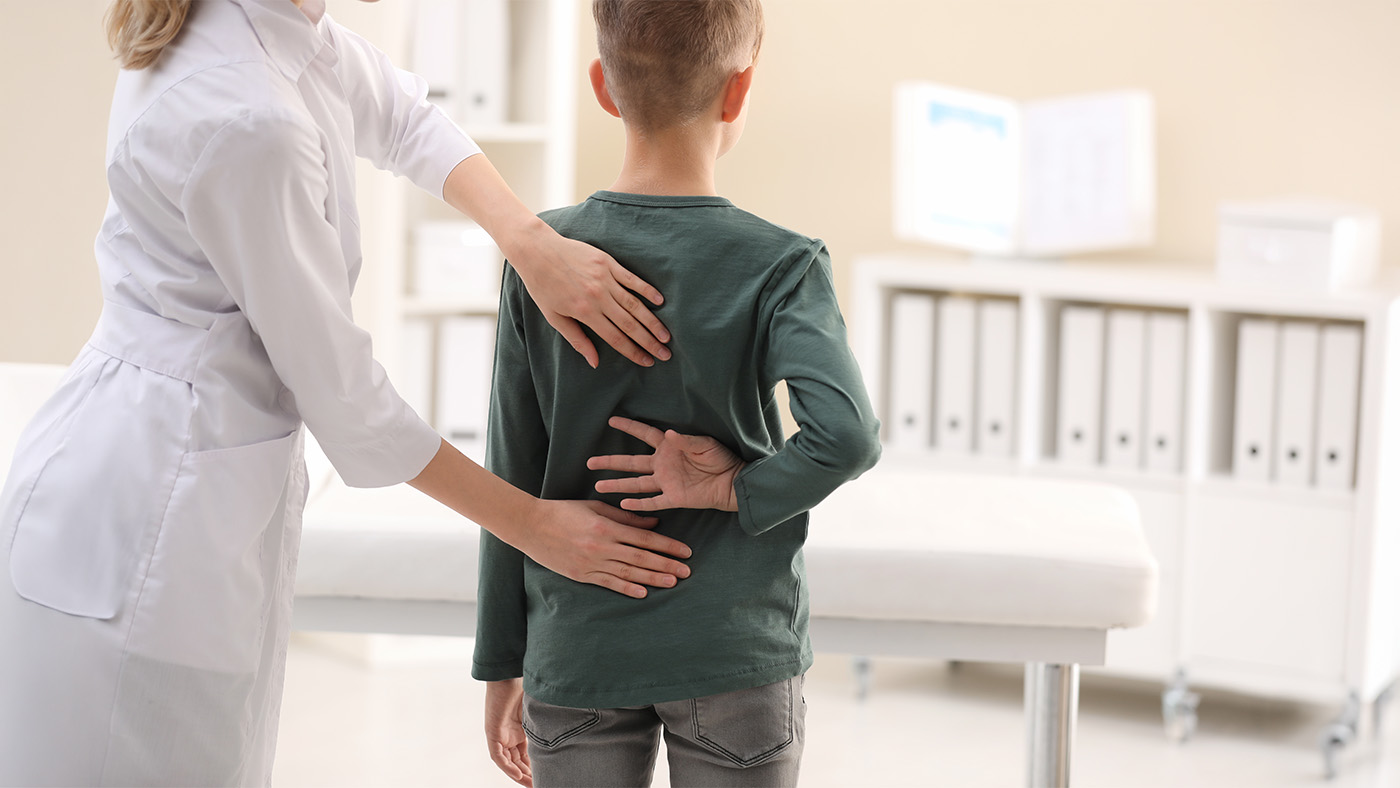
In some cases, you may be able to recognize scoliosis just by looking, but doctors have developed a number of tests to diagnose the condition and determine its severity. One common test is the forward bend test, in which the patient locks their knees and bends forward, revealing any twisting in the spine.
Doctors may also use MRI scans, CT scans, or a device called a scoliometer, which is placed on the back to measure spinal curvature directly.
Is Scoliosis hereditary?
In most cases, scoliosis has no known cause, but it does run in families, suggesting a genetic component. Still, inheritance patterns are not consistent, and researchers have yet to identify any specific genes associated with the condition.
Scoliosis Symptoms and Concerns
Common symptoms of scoliosis include:
- Uneven shoulder or hips
- Shoulder blades that stick out
- Head not centered above the pelvis
- Constant leaning to one side
- Uneven leg length
- Changes in skin appearance along the spine
- Height loss
How Scoliosis Affects Posture
The spine normally has a forward and backward curvature, but scoliosis flips the script to bend the spine side-to-side in a C or S shape. It also introduces a twist, which can cause one side of the back to pull back while the other pushes forward.
Rates of scoliosis are the same among males and females, but females are about 10 times more likely to have a curvature of 30 degrees or more. In severe cases, curvature can be 40 degrees or more and may come along with physical pain, cosmetic deformity, and psychosocial distress (bullying, anxiety, etc.).
Will Scoliosis make you shorter?
The spine should appear straight when looked at from behind, but scoliosis creates side-to-side curvature on either side of the spine. While scoliosis doesn’t actually shrink the body, the extra twists and turns can shorten your child’s height by limiting their ability to stand up straight.
Non-Surgical Treatment Options for Scoliosis
Most patients with scoliosis don’t need surgery. Only about 20 percent of kids will need to wear a back brace, and only about 10 percent will need surgery to treat scoliosis. Most of the time, treatment is conservative and non-surgical.
Scoliosis Treatment Without Surgery
The treatment your child receives will depend on the type of scoliosis they have, the extent of the curvature, family history, age, and developmental stage. Conservative (non-surgical) treatments include:
- Regular monitoring
- Pain medications or anti-inflammatories
- Exercise to strengthen important spine-supporting muscle groups
- A back brace
- Treating any underlying conditions
Physical Therapy and Exercises for Scoliosis
Exercise is important for everyone, but it can be especially helpful for kids with scoliosis. Exercise strengthens the muscles that support the spine and reduces back pain. Talk with your child’s pediatrician about any specific exercises your child should avoid. Here are a few scoliosis stretches and exercises you can try.
Pelvic tilts: Lie on your back with your knees bent and your feet flat on the floor. Flatten your back and tighten your stomach muscles and glutes. Hold for five seconds. Repeat 10 times for a set and aim for two sets per day.
Single leg balance: Bend one knee up and balance on one foot. Hold for 10 to 20 seconds. As balance improves, you can mix it up by extending your arms or crossing them over your body.
Planks: Lie on your stomach with your arms bent by your sides. Then place your elbows on the ground beneath your shoulders with your palms flat on the floor in front of you. Hold your body off the ground in a straight line, keep your abs tight, and hold for a few seconds.
Bracing Options for Scoliosis
A scoliosis back brace is a common treatment option for kids. While a brace won’t correct spinal curvature, it may be able to prevent it from getting worse.
Braces are worn as much as possible around the clock, and your child will need to wear them for as long as their spine continues growing. Some braces are intended to be worn only at night while sleeping. Others are meant to be worn practically all the time, between 16 and 23 hours a day. These braces are only taken off for bathing, swimming, and other potentially damaging activities.
Treatment for Mild Scoliosis in Teenagers
In addition to monitoring and exercise, your pediatrician may recommend a back brace to prevent worsening curvature, especially if your teen is still growing. Braces are typically made of hard plastic and formed to the body. They fit snugly beneath clothes, so they aren’t obviously noticeable.
Lifestyle and Activity Considerations for Kids with Scoliosis
Parents often wonder whether their teen with scoliosis can participate in sports such as football, dance, running, gymnastics, weightlifting, and other physical activities.
Research has shown that brace-treated patients can participate in sports and physical activities at the same level as their peers. Just because your child has scoliosis doesn’t mean they can’t play like other kids. In fact, kids with scoliosis are encouraged to participate in physical activities they enjoy.
You may want to avoid high-contact sports and activities, which could compromise your child’s spine. Consult your pediatrician about any specific limitations and whether your child should wear their back brace during sports activities.
SOURCES: