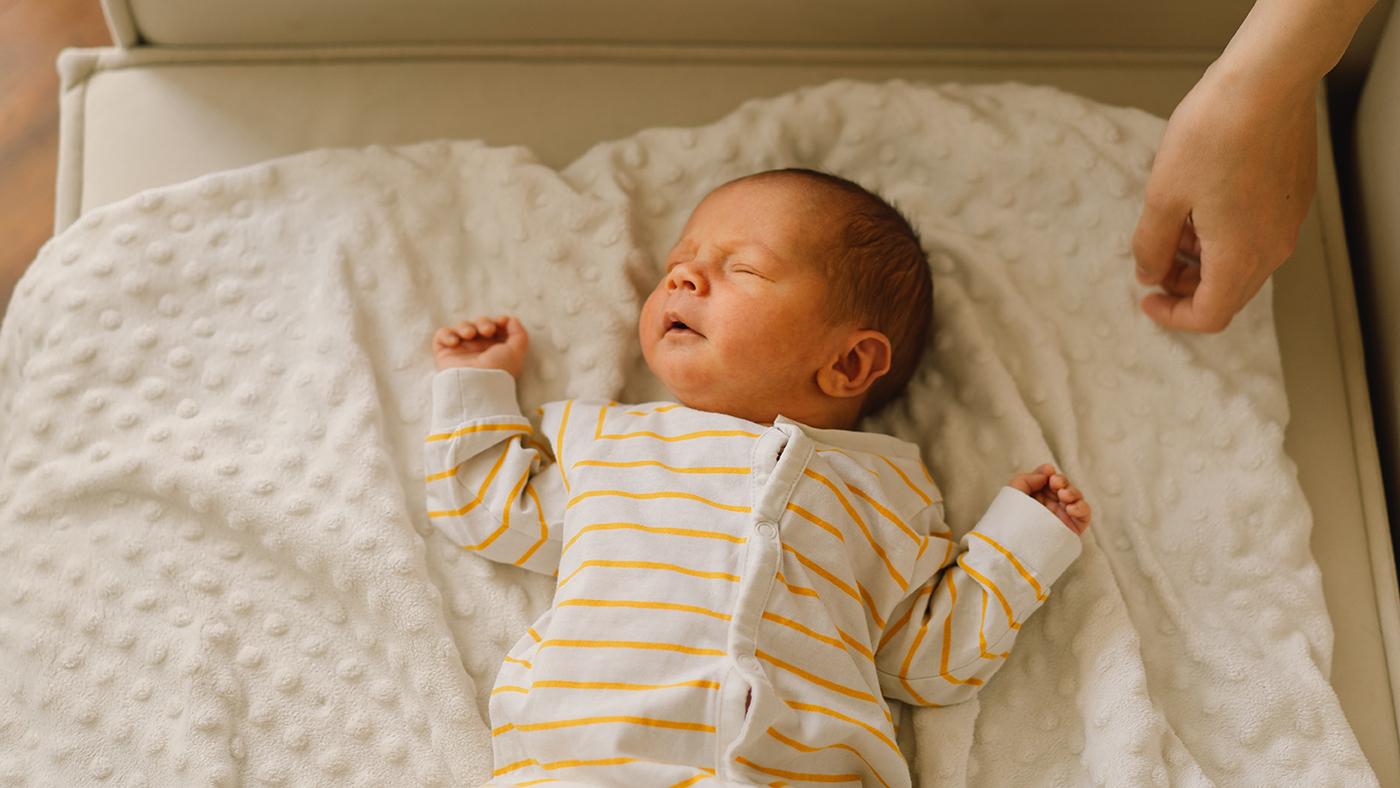
In the first few days of life, it’s not uncommon for new parents to notice a slight yellow tint to their baby’s skin or eyes. Characterized by yellowing of the skin and eyes, jaundice, also known as physiological jaundice or neonatal jaundice, is caused by a buildup of the pigment bilirubin. It’s a common condition in newborns, impacting as many as 60 percent of full-term babies and approximately 80 percent of pre-term babies.
Jaundice is almost always temporary, harmless, and a normal part of newborn development. In fact, jaundice might help your baby stay healthy. Because bilirubin is an antioxidant, it might actually help your baby fight off infections during the first few days of life.
What is newborn jaundice?
During pregnancy, your liver removes bilirubin for your baby. After birth, they’re on their own. It’s normal for it to begin in the first few days of life because your baby’s liver isn’t developed enough to process bilirubin fast enough. It usually lasts only a few weeks, once the liver is developed enough to catch up.
Most hospitals check babies for jaundice every 8 to 12 hours over the first 48 hours of life and before discharge. Most babies born after 35 weeks don’t need any treatment. If your child does need treatment, your care team will let you know what steps to take.
What causes jaundice in newborns?
Because jaundice affects between 60 and 80 percent of babies, jaundice is a common occurrence of life outside the womb. However, there are some things that increase your baby’s likelihood of jaundice.
- Too much bilirubin: When red blood cells break down, they produce a yellow-pigmented substance called bilirubin. During the first few days of life, red blood cells break down more quickly, and the liver isn’t developed enough to keep up.
- Pre-term birth: Premature babies are more susceptible to jaundice because they can’t process bilirubin as well as full-term babies.
- Heavy bruising: A difficult birth can cause bruising and increase the amount of red blood cells breaking down in your newborn’s body.
- Blood type incompatibility: If the birthing parent and baby have different blood types, antibodies transferred through the placenta can speed the breakdown of red blood cells. Doctors are aware of this possibility and typically test birthing parents to identify risk.
- Family history: Risk of jaundice may be increased if family members have had jaundice or have certain blood disorders. Diseases, including glucose-6-phosphate dehydrogenase (D6PD), Gilbert syndrome, or Crigler-Najjar syndrome, can impair the body’s ability to process bilirubin.
- Underlying condition: Jaundice can also be caused by internal bleeding, infections, an enzyme deficiency, liver problems, and other underlying conditions. In those cases, jaundice typically shows up later than infant jaundice does.
- Breastfeeding: Babies who breastfeed may have difficulty getting enough milk when they’re very young, leading to what’s known as breastfeeding jaundice. It’s in part the result of a nutrition deficit, but most providers still recommend breastfeeding for its other benefits. Breastfeeding jaundice is not to be confused with breast milk jaundice, which occurs when substances in the breast milk negatively impact the liver’s ability to filter bilirubin, causing bilirubin levels to spike temporarily.
Signs and Symptoms of Newborn Jaundice
The main symptom of jaundice is yellowing of the skin and whites of the eyes. Jaundice usually appears first on the face, then spreads to the chest, stomach, arms, and legs as bilirubin levels increase.
One way to check for jaundice is to press lightly on your baby’s forehead. Normally, the skin will look slightly lighter than usual. If it looks yellowed, your baby may have mild jaundice. Yellowing may be more difficult to see if your baby has darker skin. If you can’t quite tell, check the whites of the eyes and under the tongue.
What is a dangerous level of bilirubin in newborns?
The American Academy of Pediatrics (AAP) uses a standard chart to determine if a newborn needs treatment for jaundice, based on your baby’s total serum bilirubin level and age. Bilirubin levels above the following thresholds may be cause for concern.
- Anything over 10 milligrams during the first 24 hours of life
- Anything above 15 milligrams during the second day
- Anything above 18 milligrams on day three
- After day three, anything above 20 milligrams
Bilirubin is toxic to brain cells, and if bilirubin levels get too high and remain untreated, your baby could develop acute bilirubin encephalopathy. It can cause permanent brain damage and lead to kernicterus, a disorder with the following symptoms:
- Athetoid cerebral palsy (characterized by uncontrolled or unintentional movements)
- Permanent upward gaze
- Hearing loss
- Impaired development of tooth enamel
Contact your pediatric provider immediately if you see any of the following symptoms:
- Your baby’s skin becomes more than faintly yellow
- The skin on the belly, arms, or legs looks yellow
- Whites of the eyes are yellow
- Seems listless, sick, hard to wake up
- Feeding poorly or not gaining weight
- High-pitched crying
- Any other symptoms that concern you
If your baby won’t stop crying or has a high-pitched cry, is arching their body, has strange eye movements, or has become stiff, limp, or floppy, you should take your baby to the emergency room or call 911.
Medical Treatments for Newborn Jaundice
In most cases, particularly in babies born after 35 weeks, no treatment is needed for jaundice in newborns. If your child does need treatment, they’ll likely receive phototherapy.
Phototherapy uses a specific range of blue-green light to penetrate the skin and convert bilirubin into a water-soluble form, allowing it to be excreted through urine and feces. Phototherapy can happen at home or in a clinical setting. During treatment, your baby usually wears a mask to protect their eyes and a diaper. Light therapy can also be supplemented with light-emitting pads or mattresses. Some parents opt for a bili blanket, a portable phototherapy device in the form of a light-emitting pad.
There’s no specific timeline for phototherapy. In many cases, treatment is needed for only a day or two. In some cases, it may continue for a week or more. The length of treatment depends mostly on your child’s bilirubin levels and how quickly they decrease with treatment.
In severe cases, if your baby has extremely high bilirubin levels, your pediatrician may recommend a blood exchange transfusion, in which some of your baby’s blood is removed and replaced with blood from a donor.
Home Remedies for Jaundice: What’s Safe and What’s Not
In most cases, the only real “treatment” you need to do at home is feeding your baby often. Regular feeding encourages urination and bowel movements, which helps your baby’s body rid itself of bilirubin. Jaundice typically clears up within the first few days.
Does sunlight help jaundice?
Some parents also wonder if they can treat their child’s jaundice with a little extra sunshine. While sunlight may impact bilirubin levels, it’s not a substitute for phototherapy. While sunlight does contain the wavelengths used in phototherapy, it also exposes your newborn to UV and infrared radiation, which can lead to overheating, dehydration, and sunburn.
Do Vitamin D drops help with jaundice?
The idea that Vitamin D impacts jaundice may come from the fact that sunlight helps the body produce Vitamin D, and phototherapy uses part of the visible light spectrum. There is some evidence of a correlation between vitamin D and bilirubin levels, but it’s unclear if more vitamin D has any protective effect.
In fact, some studies have shown that supplementing with Vitamin D did not impact the amount of bilirubin in the body or speed up the body’s ability to process it.
Sources:
Cleveland Clinic, Jaundice in Newborns
March of Dimes, Newborn jaundice
Mayo Clinic, Newborn jaundice and light therapy
CDC, What are Jaundice and Kernicterus?
Harvard Health, New guidelines on newborn jaundice: What parents need to know
Stanford Medicine, Frequently Asked Questions About Phototherapy