
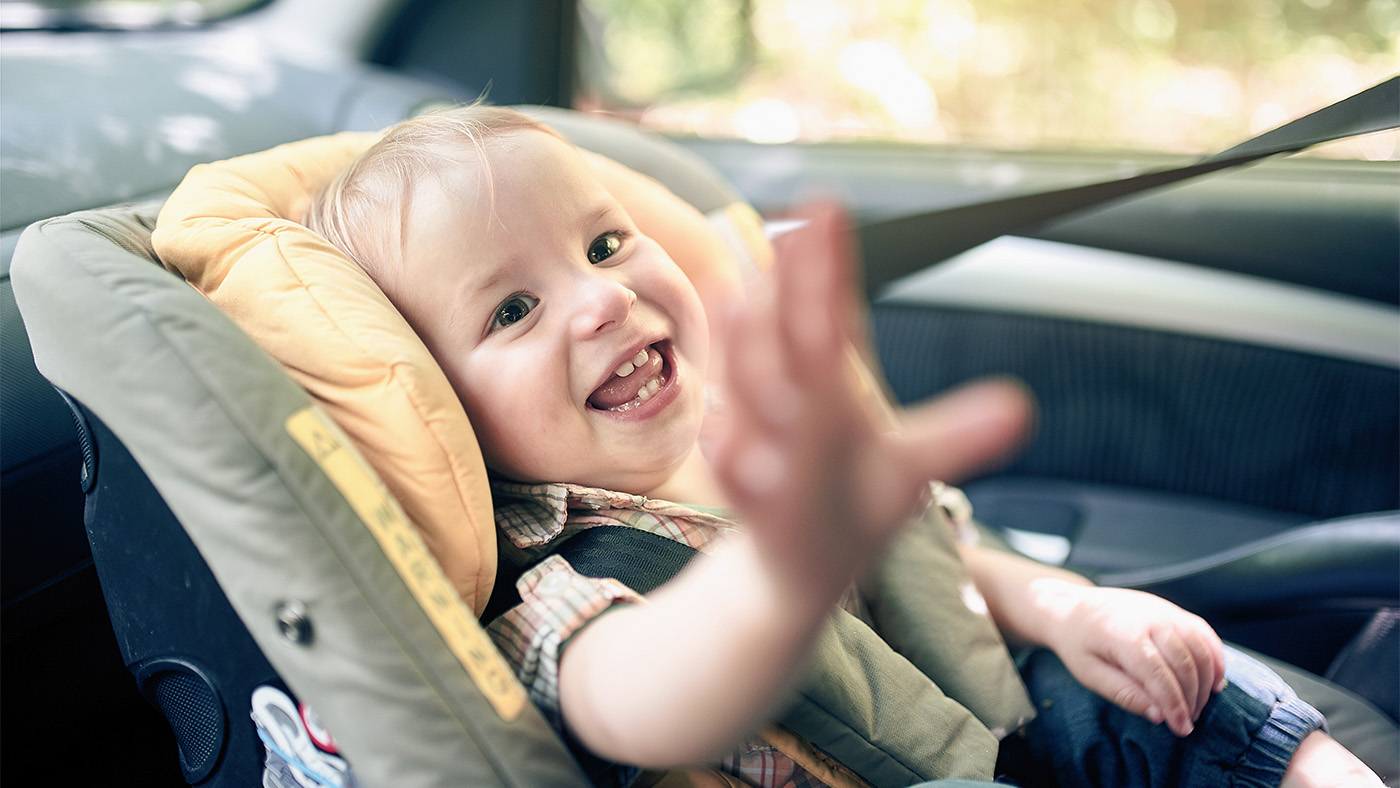
The idea of losing a child to a hot car accident is almost too painful to think about, and it’s tempting to believe it could never happen to your family. The truth is, it can happen to any loving, attentive parent, and understanding why is one of the most powerful ways to protect your own child.
On average, 37 children die in the United States each year after being left in a hot car, a result of hyperthermia, when the body’s temperature climbs above 104°F and can’t come back down on its own. Below, we’ll cover how quickly a car can heat up, why this happens even to careful parents, and the simple habits and tools that can help keep your child safe.
How hot can a car get in the sun?
Exactly how fast your car heats up depends on a lot of factors: the outside temperature, cloud cover, shade, your car’s color, and even the color and material of the interior. But the inside of a car can heat up faster, and at lower temperatures, than most people expect.
Your car’s interior can reach 115°F even when it’s only 70°F outside. The first hot car death of the year typically happens in March, so this isn’t only a summer concern.
Researchers from the University of California, San Diego School of Medicine and Arizona State University studied how quickly cars heat up in different levels of sunlight and shade. In direct summer sun, a car can reach deadly temperatures in as little as an hour, about the time it takes to run into a store for a few items. Even parked in the shade, a car can get hot enough to seriously harm a small child.
Share a brief note here about a time you’ve talked with a family about heat safety, or what you want parents to remember most from this section.
Child Heatstroke: Why Young Children Are Especially Vulnerable
Young children’s bodies don’t regulate temperature the way adult bodies do. If you’re hot, your child is even hotter.
Kids have a higher metabolism than adults, so they heat up faster. They also sweat less per pound of body weight, which makes it harder for them to cool down, and they’re less likely to drink enough water on their own throughout the day.
Because kids have a smaller body-mass-to-surface-area ratio, they have a harder time keeping a stable body temperature in extreme conditions. As a result, a child’s body temperature can rise three to five times faster than an adult’s, putting them at much greater risk of heatstroke.
Heatstroke can be life-threatening. Watch for:
- Flushed, red, dry skin
- Deep or rapid breathing
- Little or no sweating
- Dizziness, headache, or fatigue
- Less urine than usual, or urine that’s dark in color
- Loss of consciousness
If your child shows any of these signs after time in a hot car or hot weather, treat it as a medical emergency. Call 911 right away and use the cooling steps later in this article while you wait for help.
Add a note here about what you tell parents to watch for in the hours after a child has been overheated, even once they seem back to normal.
Why Hot Car Deaths Happen to Loving, Responsible Parents
After a hot car death, a common question is, “How could a parent possibly forget their child in the car?” It’s a fair question, and an understandable one. The truth is that life is hectic, and a tragic lapse in memory can happen to anyone. The first step in protecting your family is recognizing that this could happen to you, too.
More than half of all hot car deaths happen because a loving parent or caregiver forgot a child was in the car, often on the way to drop them off at school or daycare. Research suggests these tragedies are rarely about neglect. They’re about a common memory failure that can affect anyone.
Thursdays and Fridays are the most common days for this to happen, maybe because parents are worn down from a long week or distracted by looming deadlines. Any break in routine, big or small, can be enough to cause someone to forget something important, including a child in the back seat.
Forgotten Baby Syndrome: The Brain Science Behind It
It can feel impossible to imagine forgetting something as important as your own child, but it happens, and it’s rarely anyone’s fault. Most of the time, it comes down to how working memory functions, not a failure of love or attention.
You rely on two types of memory every day. One runs in the background and lets you do familiar tasks on autopilot, like driving a route you know well without really thinking about it. The other is more active. It’s what helps you notice your surroundings, make a plan, and follow through on it, like remembering to stop for milk on the way home.
Stress, exhaustion, distraction, and changes in routine can all interfere with that second, more active kind of memory. When that happens, your “autopilot” memory can take over completely, making it easier to forget the diaper bag, the dog, or a sleeping baby in the back seat. The same lapse that makes you forget to grab your lunch from the fridge can make you forget a child in the car. It doesn’t mean you’re a bad parent. It means you’re human.
Add a reassuring note here for parents who worry this could happen to them, drawn from your own experience talking with families.
Hot Car Safety: Habits That Can Prevent Tragedy
Once you accept that memory isn’t perfect, you can build habits that close the gap. There’s no single right answer, just the reminder system that actually works for you. Here are a few ideas to get you started.
- Double check: Check the back seat every time you get out of the car, even on days you don’t think you need to.
- Lock up: Lock the doors every time, after confirming the car is empty. A child climbing into an unlocked, unattended car is the second most common cause of hot car deaths.
- Not even a minute: Never leave a child alone in the car, even for a quick errand. Knowingly leaving a child in the car is the third leading cause of hot car deaths, and even a few minutes can be dangerous, windows cracked or not.
- Team up: Ask your daycare or school to call you if your child doesn’t arrive as expected, and commit to letting them know if your child’s routine changes.
- Place a reminder: Keep something you need, like your phone, bag, or badge, in the back seat, so you’re forced to open the back door every time you leave the car.
Technology That Can Help Prevent Hot Car Deaths
If you think a physical reminder would help, there are a number of products on the market designed to help you remember a child in the back seat, or to alert others nearby. Here are a few options to give you an idea of what’s available:
Cleverelly: This device looks like a car phone charger and plugs into your vehicle’s 12V electrical port, commonly called the cigarette lighter. When you park, it delivers an audio alert reminding you to check the back seat. To help keep you from tuning it out, it cycles through 10 different alerts in different voices.
Itomoro Baby Car Camera: This camera points at your baby in the back seat and gives you a live view on a dashboard display, so you can keep an eye on them while you drive. As a happy side effect, you’re less likely to forget you have a little passenger when they’re staring back at you.
Ride & Remind: This car alarm system activates whenever the back seat is opened and closed. Once you turn off the ignition, an alarm sounds to remind you to get your child out of the back. You can only silence it by opening the back seat and pressing a button. If you don’t, the car’s horn starts honking after 40 seconds to alert anyone nearby.
What to Do If You See a Child Alone in a Hot Car
If you see a child alone in a car, check whether they’re responsive and okay. If they are, stay with them until help arrives.
If the child seems distressed or unresponsive, call 911 immediately, and do whatever you can to get into the car, including breaking a window if necessary. Utah’s Good Samaritan law protects people who act in good faith to help in an emergency like this one.
Get the child out of the hot car as quickly as possible and into a cooler space, like an air-conditioned building or, if that’s not available, the shade. Remove excess clothing, cool their skin with water or a damp cloth, and stay with them until help arrives.
For Childcare Providers and Other Caregivers
Preventing hot car deaths takes a village, and childcare providers and caregivers play a big role. Talk with your staff and the families you work with about how quickly cars heat up and how easily this can happen to anyone.
Set up a safe arrival system so you can alert parents if a child doesn’t show up as expected and ask them to do the same for you. A quick text or phone call can make all the difference.
Add a note here about a safe arrival system or reminder habit you recommend to the childcare providers and families you work with.
We’re Here to Help
Keeping your child safe in the car is one small part of keeping them healthy overall, and you don’t have to figure it all out on your own. If you have questions about heat safety, hydration, or anything else on your mind, contact your child’s provider. Families First Pediatrics providers are here to help you feel prepared, not just when something goes wrong.
Sources
Arizona State University, Study: Hot cars can hit deadly temperatures in as little as one hour
Consumer Reports, Do Cars With a Dark Interior Really Get Hotter in the Sun?
National Weather Service, Heat Safety Tips and Resources
Unicef, Heat waves and how they impact children
EPA, Protecting Children and Maternal Health from Extreme Heat
Oregon State University, Children and Heat: Protect Infants, Kids, and Teens
NHTSA, You Can Help Prevent Hot Car Deaths
Craig Swapp & Associates, Good Samaritan Law in Utah
Consumer Reports, Anyone Could Forget a Kid in a Hot Car, Research Shows
NBC News, Hot Car Deaths: Scientists Detail Why Parents Forget Their Children